- (304) 254-8115
- (681) 207-7471
- info@nrgrda.org

Beckley, W.Va. (March 12, 2026) – Access to child care was recognized Wednesday, March 11, 2026, by members of the West Virginia Senate Finance Committee as both an economic and workforce development issue during discussions of House Bill 4191.
The bill is a combination of several child care bills that were initially introduced separately in the House and includes amendments to the state’s Employer-Provided Child Care Tax Credit program, shifting the state’s child care subsidy system from attendance-based to enrollment-based payments and other related child care provisions.
“At the end of the day, (HB 4191) is an economic development bill,” said Sen Robbie Morris, R-Randolph. “This is a workforce development bill. This greatly expands the opportunities for working parents, parents to go to work and be a part of the workforce. It’s a fantastic thing. I want to applaud (Sen. Jason Barret, Senate Finance Chair) for putting it on the agenda, and I would urge passage of this very important, much needed piece of legislation.”
HB 4191 was approved by the Senate Finance Committee on Wednesday and moved on to its first reading later that evening, keeping it on track for passage before the legislative session ends Saturday.
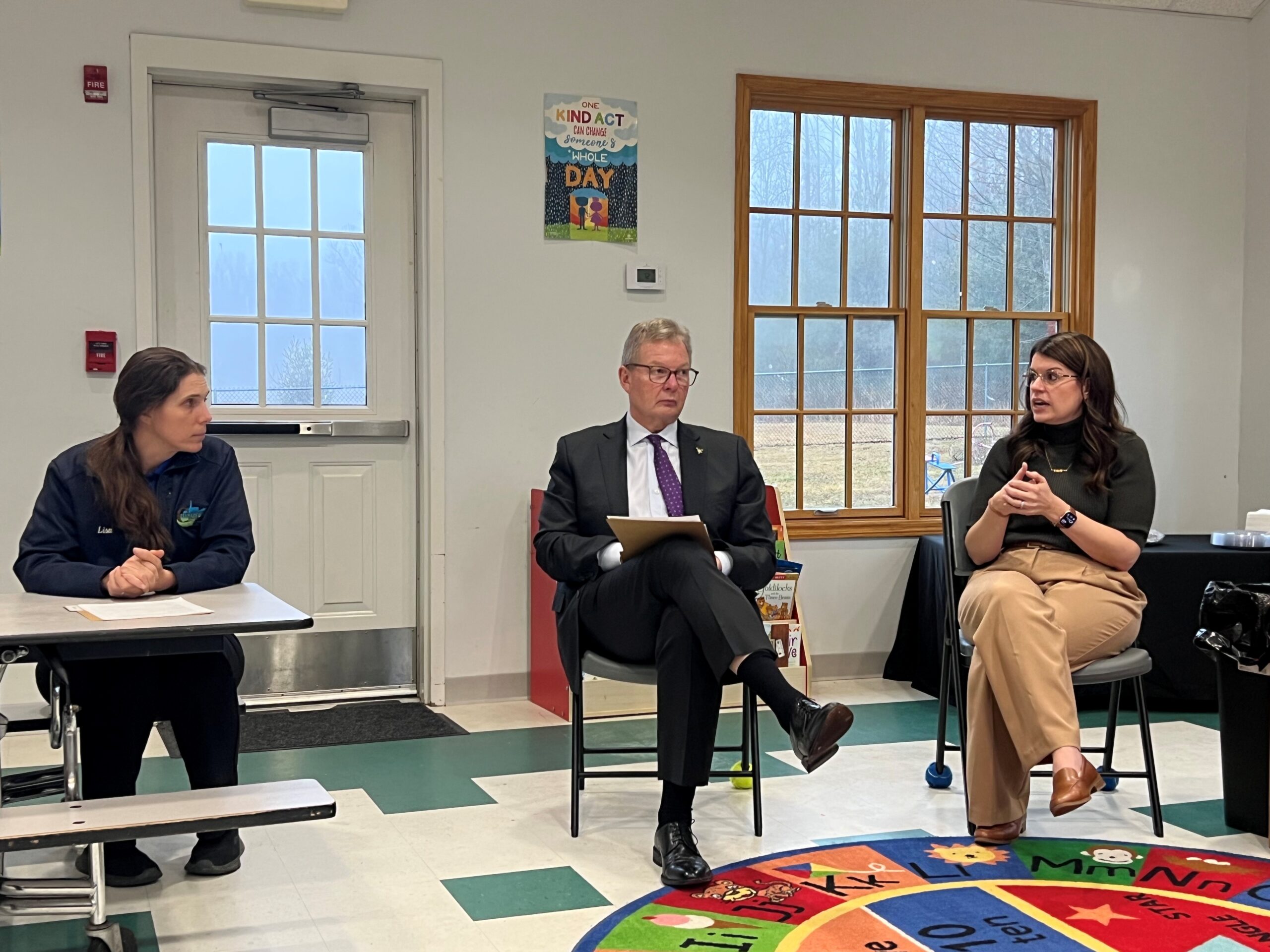
The topic of child care as an economic development issue was also the focal point of a recent round table discussion with State Treasurer Larry Pack, representatives from the New River Gorge Regional Development Authority, Raleigh County legislators, and local leaders at Stepping Stones Academy, a child care facility in Beaver.
Referencing HB 4191 during those discussions, Jozy Moore, NRGRDA’s Policy and Government Outreach Coordinator, said the bill helps to incentivize employers to invest in the child care needs of their employees.
“HB 4191 expands the state’s Employer-Provided Child Care Tax Credit program by allowing businesses that contribute to their employees’ child care costs to claim a tax credit equal to 50 percent of their contribution,” Moore said.
When the Employer-Provided Child Care Tax Credit program was created in 2022, location and employee usage requirements limited eligibility to employers with the resources to construct and operate their own on-site child care facility. As a result, Moore said the credit was effectively out of reach for most employers in West Virginia, which likely wasn’t the program’s original intent.
HB 4191 remedies those exclusions by adding a definition for “employer-sponsored child-care facility”, defined as a third-party licensed child care provider financially supported by one or more employers not subject to proximity or employee usage thresholds.
This would also allow businesses participating in cost-sharing models such as Tri-
Share, in which child care costs are divided among an employee, their employer, and a third party, typically a government entity, to qualify for the tax credit.
NRGRDA, the regional economic development authority representing Raleigh, Fayette, Summers and Nicholas counties, emphasized the importance of child care in economic development last year when its board of directors approved child care as one of its six legislative priorities for 2026.
Jina Belcher, NRGRDA’s Executive Director, said HB 4191 creates a meaningful pathway for employers to become part of the solution to address the state’s challenges in child care. She added that in doing so, it also addresses broader economic development challenges, including workforce retention, workforce participation, and employer recruitment.
“The lack of accessible child care continues to prevent some West Virginians from entering the workforce and pushes others to leave it,” Belcher said. “For employers, this means workforce stability now depends in part on access to reliable child care.”
She went on to state that, given these challenges, child care availability is increasingly part of the conversations for businesses looking to grow or located in West Virginia. In addition to water, sewer, power and other essential infrastructure, Belcher said businesses are now asking whether a community can support the families of their employees.
“Without reliable child care, economic development efforts face an added and growing barrier,” she said.
Sen. Ben Queen, R-Harrison, told his committee members Wednesday that he regularly sees the positive impact child care has on working families in West Virginia.
“I get to be one of these lucky parents, my wife and I get to bring our little guy to day care each and every day,” Queen said. “I think when you live this experience and get to watch parents my age each and every morning drop their kid off, you realize that child care is an incredibly important part of our workforce infrastructure.
“Those parents who drop off their kids beside me – nurses, teachers, construction workers, small business owners, entrepreneurs – they realize when reliable child care is available, those parents, both parents in my household, get to participate in our workforce and grow our economy.”
Queen went on to say that if the state leaders are “serious about economic development” and growing the workforce, then “child care must be part of that strategy.”
“I think when parents go to work with confidence that their children are in good hands, it’s a really good start and an idea for business, so that they know that, that their employees are taken after, and that we can continue to grow our workforce here,” he said.
During the roundtable conversation at Stepping Stones, Pack said that the state should be having more conversations about funding for child care programs for children before they reach school age.
“We’re telling young families that until their kids reach kindergarten, child care can cost them almost everything when they’re trying to start a family,” Pack said. “We have to address that and talk about it and make it higher on the priority list.”
Others present during the roundtable discussion included Delegates Bill Roop and John Jordan, who represent Raleigh County, as well as Michelle Rotellini, President/CEO of Beckley-Raleigh County Chamber of Commerce.
Staff and board members at Stepping Stones also raised concerns with Pack and other officials about how demand for child care statewide has far outpaced what’s available.
Stepping Stones Director Kristen Alford said that the issue is tied to providers’ struggle to retain the workers needed to maintain or expand child care slots, as wages remain low, even as training and regulatory requirements, understandably, remain high.
She added that, with fewer workers, providers are unable to care for as many children because of staffing ratio requirements. Fewer children mean less revenue, which in turn limits what providers can pay employees, creating what she described as an ongoing “chicken-and-egg” cycle.
“We have the capacity for 94 kids, but because of the teacher-to-child ratio, we only have
72 enrolled right now,” Alford said.
Belcher said this exact scenario and issue will continue to occur as long as child care is regulated like a social service while also expected to run like a for-profit business.
“We never want to deregulate childcare, because the safety of the kid is number one, so we have to figure out how are we offsetting the fact that we’re expecting them to operate like a business,” Belcher said. “That’s one of the challenges that we see, and that’s where we really feel like the employer has to start standing in the gap.”
Alford also raises other concerns regarding the state’s child care subsidy system, which has not kept pace with rising costs, leaving families or facilities to absorb the widening gap.
She added that as child care costs rise, families are forced to reevaluate whether leaving the workforce makes more financial sense than continuing to pay for child care. Some of those concerns are addressed in HB 4191.
In addition to expanding the use of the state’s Employer-Provided Child Care Tax Credit, HB 4191 attempts to resolve longstanding concerns with the state’s subsidy system by laying the groundwork for reimbursement rates that better reflect the cost of providing care.
Given the other significant economic development goals legislators have prioritized this session, Belcher said HB 4191 would complement those efforts by empowering businesses to be part of the solution while supporting both child care providers and working families.
“The opportunity to achieve these goals now rests with the Senate, which has the chance to recognize the value and far-reaching impact this bill could have on West Virginia’s workforce and families,” Belcher said.
# # #